Monday, January 26, 2015

Structured Notes Investing – Checklist


Introduction


Structured notes are increasingly becoming choice of alternative investment strategies for investors who are not able to generate required yield from traditional investments that include stock, bonds and mutual funds. These notes synonymous to their name provide customized (“Tailored”) returns on the investment with accompanied risk. This kind of customization results sometimes increased complexity and becomes difficult to comprehend for a naïve investor. To alert investors of potential risks and features of the structured notes, The SEC’s (Securities and Exchange Commission) office of Investor Education and Advocacy has issued an investor bulletin investor bulletin.

In this note, Investor will be introduced to the details of the investor bulletin that includes,
·         Risks and features of the structured notes
·         Key Questions to be asked
·         Examples
Risks and Features:
“Structured notes are securities issued by financial institutions whose returns are based on, among other things, equity indexes, a single equity security, a basket of equity securities, interest rates, commodities, and/or foreign currencies.  Thus, your return is “linked” to the performance of a reference asset or index.  Structured notes have a fixed maturity and include two components – a bond component and an embedded derivative.  Financial institutions typically design and issue structured notes, and broker-dealers sell them to individual investors.  Some common types of structured notes sold to individual investors include: principal protected notes, reverse convertible notes, enhanced participation or leveraged notes, and hybrid notes that combine multiple characteristics.”

SEC provides guidance with respect to some research that an investor should consider doing before investing in the structured notes to clearly understand the risk return profile of the investment. Investor should consider the questions to understand the dynamics of the note.  In some cases they are better off taking help of an investment professional.

How to locate the information to understand the dynamics of the note before investing:
Structured note issuers provide information pertaining to the terms of the investment, risks associated, payoff performance and initial estimate of the price in their prospectus. Investors should either peruse the prospectus or seek advice of an investment professional to get clear understanding on the note. Table below describes a check list of the information per SEC and where to locate corresponding information on the prospectus.
Regarding the SEC Structure Note checklist, the following will describe where the information can be found in the two example notes.
Examples and Description
The preface to the location of information in the note should be that there is no strict standard format for the layout of a Structure Note. In the case of our two examples, MS and UBS, the layout of information is mostly similar in the first two pages.
Check List
What is inside the note?
Location in the two example notes?
What are the fees and other costs associated with the investment?
Fees and commissions are costs of manufacturing structured notes and will increase the cost of the note to the investor. Investor should look into the terms sheet for this information
Usually in the bottom of the first page clearly labeled as Agent’s Commissions or Underwriter Discount in the case of our two examples. But for other issuers this information is right next to Issue Price to Public or Price to Public. This is all dependent on the issuer jargon.
How much above an issuer’s estimated value of a structured note will I be paying for the structured note?  Do I know the issuer’s estimated value and its relevance to my investment decision?
Structured notes will carry issuer’s estimated value. This value includes cost of manufacturing the note. For example, notes that have longer maturity will be valued at discount due to the time value of the principal of the note. Understanding this aspect of difference between the initial value of the note and investment will help the investor to understand true cost of the investment. 
As mentioned above this is found on the bottom of the first page, in our examples as, Issue Price to Public and Price to Public.
How do I know whether this product is appropriate for me given my overall investment objectives?  Structured notes may not be a suitable investment for you.  You should review your investment objectives and tolerance for risk with your broker or financial adviser before you consider investing in a structured note.  They can help you determine whether the risks associated with a particular structured note are within your tolerance for risk, or whether your investment needs are better served by investing in another product.  Your broker must only recommend securities transactions and investment strategies for your brokerage account that are suitable based on your investment profile.
Investment policy statement based on the risk appetite and tolerance of an investor will guide the investment decisions. Investor should clearly understand how to clearly customize risk reward profile to increase return and reduce the risk based portfolio optimization approach. Portfolio optimization provides guide posts for an investor who wants to increase his investment spectrum in the mean variance space. Structured notes with their tailor made risk and return profiles can be structured according to specific set of risk preferences. Investor should speak to their broker or an investment professional to understand the risks in the investment.
This is a little tricky since the suitability is determined by investor’s risk appetite. But in the two examples there is a section called risk factor. This section is used by issuer to point out and explain what types of risk this note accompanies.
What other investment choices are available to me?  Are other products available that provide investment exposure to similar assets, indices or strategies?  If so, how do the costs of these other products compare to those associated with the structured note? Carefully consider what might be a suitable investment for you, and whether there are better alternatives to the structured note you are considering.  For example, can I purchase some or all of the components of the structured note separately for a better price? 
Structured notes are very specific and customized investments. An investment professional or professional investor can deconstruct and replicate the payoff structure for many of these notes using other traded instruments. In some cases it is not possible. Investor should understand the price of the note separately in terms of its components and compare it with note price. Investor should consider taking help from the investment professional.
How long will my money be tied up? Many structured notes are meant to be held to maturity. If you need your money back prior to maturity, you could lose a significant portion of your investment.

Traditional investments (stocks/Bonds/ETFs) can be bought and sold on any day and time on the market. They don’t come with any kind of preset maturity. On the other hand structured notes will have maturity term and investment will be locked till that point in time unless the issuer calls the note or the investor puts back the note. This feature will potentially lock up the money for a period of time. Investor should understand their needs and discuss with their broker or an investment professional.
This information is available in the Final Terms( or sometimes called Key Terms) on the first page. In our UBS case, it is labeled as Maturity Date, Jan 24, 2017. For Morgan Stanley, it is labeled as Maturity Date, Jan 20, 2017.   
Can I sell or otherwise liquidate my investment before the maturity date? A liquid market for structured notes does not exist. If you want to sell your structured note before it matures, you might have to do so at a price less than the amount you paid for it, or you may not be able to sell it at all.
As mentioned above traditional investments are liquid investments. You can transact in them easily on the market. Conversely Structured notes are thinly traded. Selling them before maturity will often carry penalty (by the issuer) and due to illiquidity it will become difficulty to sell.
This information was not available in the two example notes but might be available in other notes. There might also be information on this in the product supplement.
Is there a call feature? If so, be sure you understand what can trigger the call and the earliest date that the structured note may be called. You will also want to ask your investment professional about a strategy in the event your structured note is called.
Call feature is a novel aspect of the structured note that enables an investor to exit the investment under certain favorable or unfavorable investments. Usually call feature will increase the yield of an investment. Notes like Auto callables will mature automatically when the note underlying reaches certain preset level before maturity. Investor should speak to an investment professional about the embedded call feature.
The Note features are indicated in the subtitle of the note. The Morgan Stanley example indicates the features of the note being a Contingent Income Auto-Callable. The UBS examples shows it is a Trigger Autocallable Optimization.
Further explanation of the note features are provided by Morgan Stanley in the Investment Summary section in page three.

In comparison to the UBS example, which indicates a trigger price in the Final Terms.
Are potential returns limited? Some structured notes have caps on the returns you can earn based on the performance of the reference asset or index
Investors should understand if the note provide limited or unlimited returns. This will help in evaluating the investment compared to other investment alternatives.
This information is usually given under the section called Hypothetical Examples.
What are the tax implications? You might wish to consult with a tax advisor to understand the consequences of any particular structured note, including imputed interest and any foreign tax consequences.

Every investment has tax implications and structured notes are no different. Infact on the term sheets issuers provides guidance to what is taxable and what is not cursorily. Again investors should speak to an investment professional on this aspect.
The tax implication generally nested deep in the note. In the Morgan Stanley example it starts on page 18 and continues to page 22.

However the UBS explains that the tax information can be found in the “What are the Tax Consequences of the Securities” and “Supplemental U.S. Tax Consideration” in the UBS Trigger Phoenix Autocallable Optimization Securities Product Supplement (TPAOS).
How does the payoff structure work? Is it possible to lose money, or not have any gain at all, even if the reference asset or index goes up? Purchasing a structured note does not guarantee positive returns. For example, the reference asset or index might not increase in value—or even if it does, there may be conditions that limit your returns.
Structured notes are created with a variety of payoff structures.  Some have principal at risk that is you might lose a portion or all of the initial investment. Therefore investor should understand how the payoff structure works. Investor should seek help of an investment professional in this regard.
This information is usually given under the section called Hypothetical Examples.
What is the credit risk of the issuer of the structured note?  Remember that any payoff on a structured note is subject to the creditworthiness of the issuer.  Be sure to understand the financial condition of the issuer and read its disclosures as carefully as you would for any other investment.
Structured note issuer guarantees the payment of the principal and coupons as per the terms of the investment. Sometime due to deterioration of the financial condition of the issuer will lead to default on the note by the issuer. Therefore investor should understand the creditworthiness of the investor.
This information is found in the Risk Factor section and used to explain how the issuer is at risk to the Structure Note.  
Do I understand the investment?  Many structured notes are complex.  If you do not understand how the structured note works, ask your investment professional for help.  If you still do not understand the structured note, you should think twice about investing in it.
Structured notes are in general have payoff structures that are complex and needs an investment professional to analyze them. For instance digital payoffs and basket payoff involve binary events or correlations between the underlying entities. So investor should seek help of an investment professional
As the SEC recommends it is best to ask your investment professional for help. But if you want further information, the notes include a hyperlink for a Product Supplement as well as a Prospectus.
Both of our example notes show it in the Additional Information section.  For the Morgan Stanley note this section is all the way in the bottom of the note. But in the case of the UBS note, this is right under the Final Terms.


Sunday, August 17, 2014

Structured Note Issuance Summary – August week 1-2, 2014


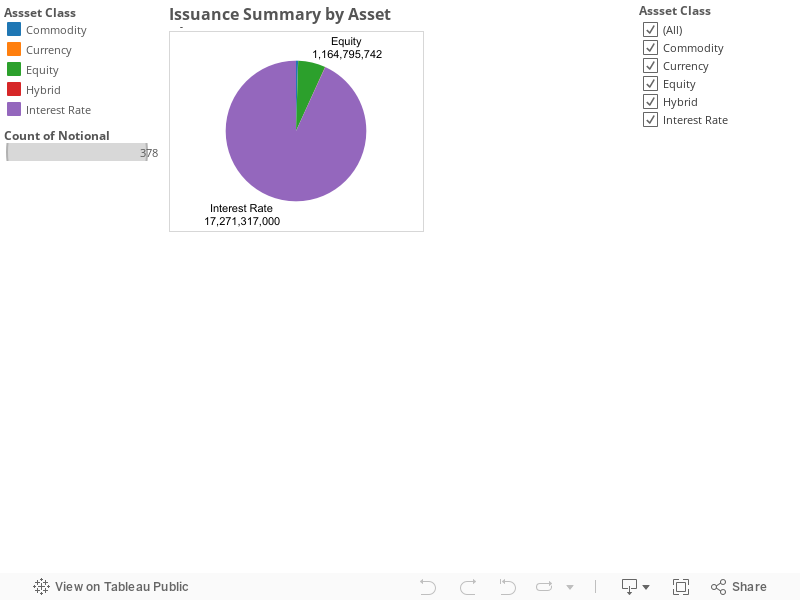
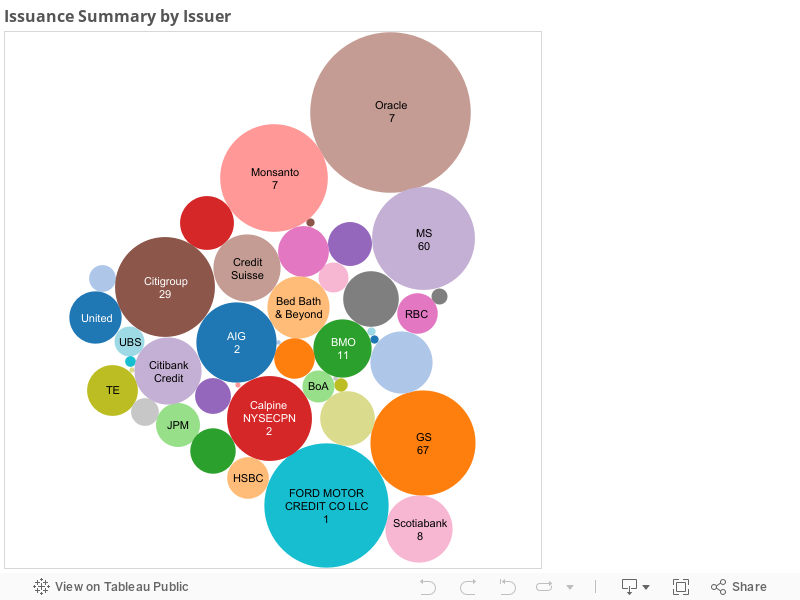
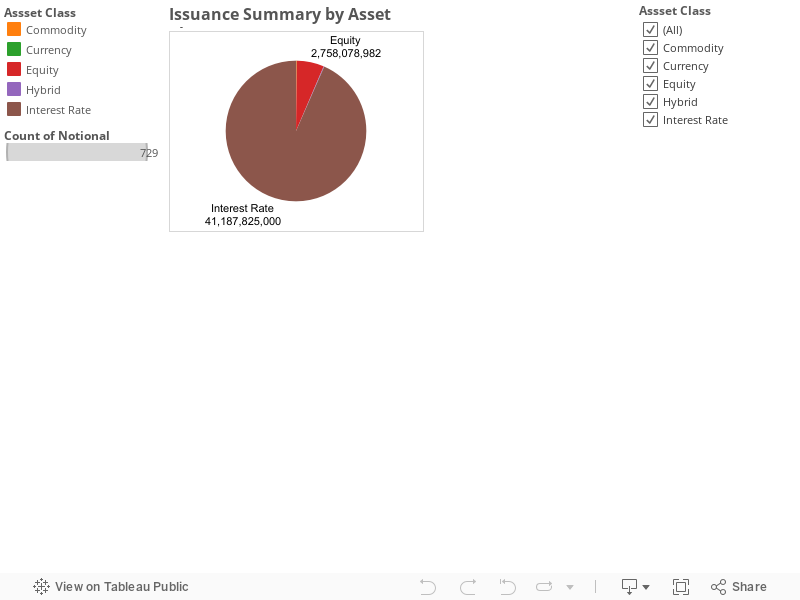
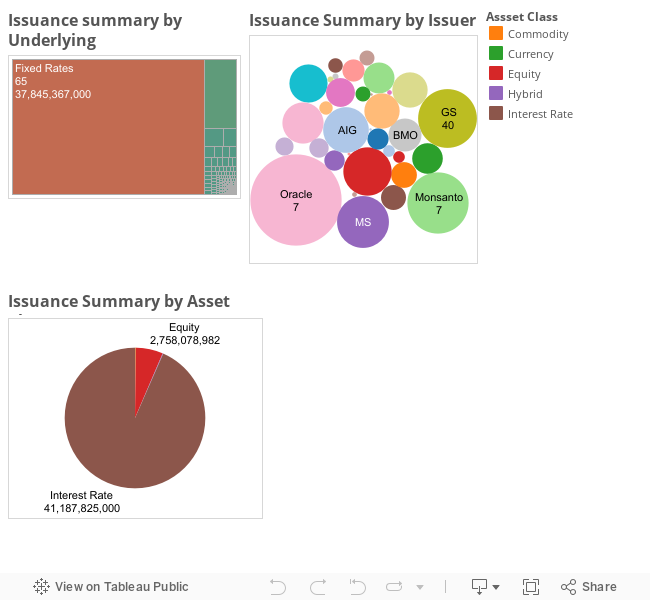
During the week of Aug4- Aug15, 2014 structured note issuance has been $18.5 Billion across various issuers and asset classes. Most of the issuance ($1.16 Billion) is driven by Equity Linked notes and $17.27 Billion of the issuance is driven by Interest linked products. There has been some activity in commodity linked issuance this week. For Details of the distribution refer to the chart below. Not surprisingly majority of the structured note issuance is linked to Interest rate linked by few issuers.

This week, structured notes were issued with variety of flavors and interesting themes. Majority of this issuance comprised of Interest Rate related notes Read on for more details.


You can click individual asset classes to see how the underlying issuance has happened within each asset type by underlying and Issuer.


Underlying analysis

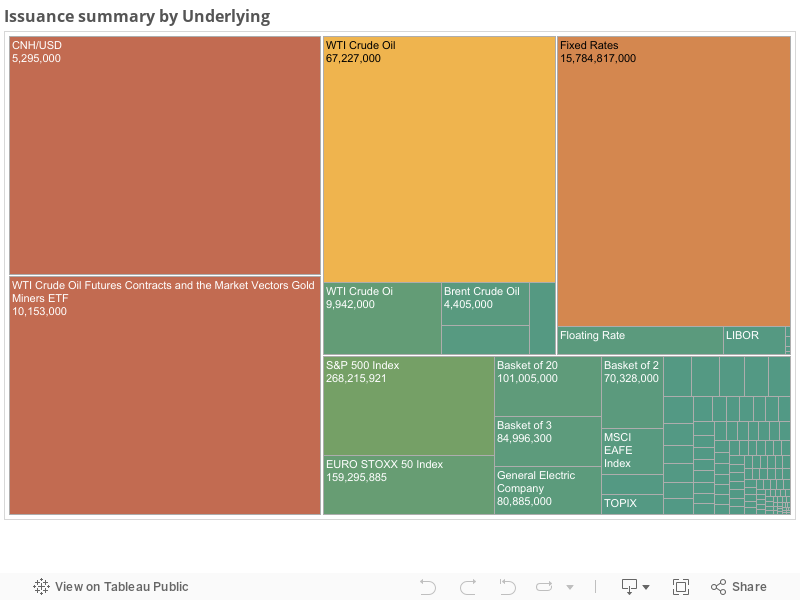
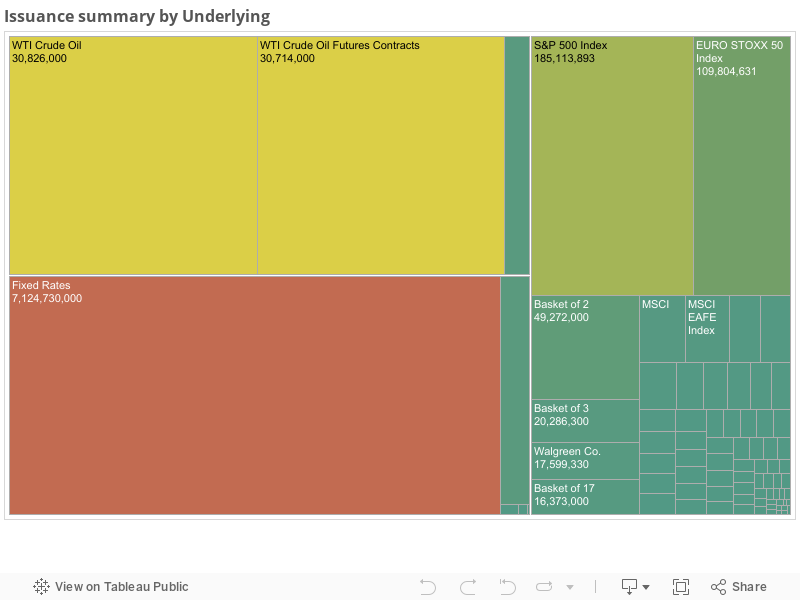
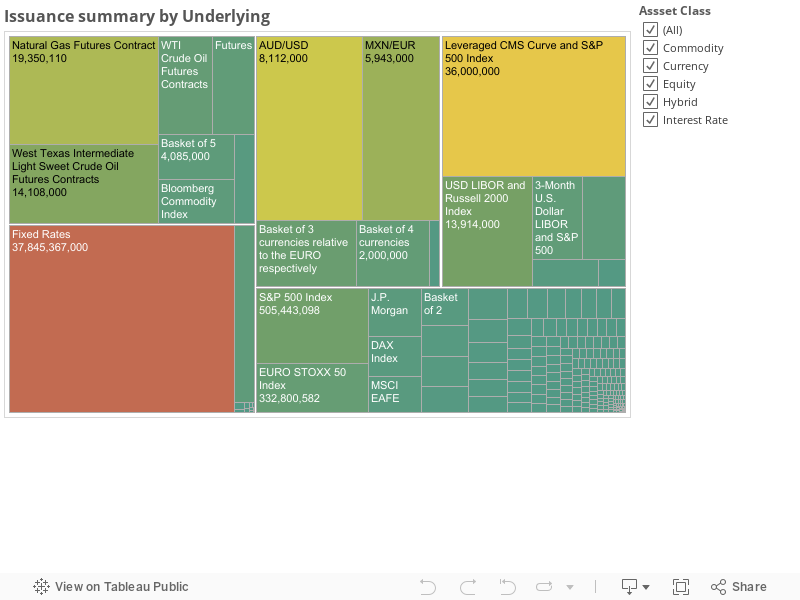
On the Equity linked notes front there has been a good size activity. Notes have been created on variety of underlying. Index related issuance has been significant. This week issuance included notes created on the indices ( S&P 500, Stoxx 50, Russell 2000) and single names ( Amazon, Apple, Genworth Financial, Market Vector Junior Gold Miners ETF, and so on). There has been significant activity around basket linked notes.

Comparing this week to last week there’s less notes being issued. Among the high notional notes is the $101 million on a Basket of 20 by BMO. Another one by Barclays is on General Electric for $80.8 million. Than GS on the TOPIX index for $19.4 million. JPM issues a note of $50.1 million on a basket of two. The Euro Stoxx 50 Index was used as an underlying by GS for a notional of $15.3 million. Deutsche Bank used a notional of $15.1 million and $14.9 million on SP 500 and MSCI EAFE Index respectively.


Interest rate linked issuance limited to standard, step up callable notes and Fixed rate notes. Activity has been subdued this week.Citigroup, GS and a few others are major issuers of these products.

This week we have seen commodity note issuance on Brent Crude Oil by J.P. Morgan, Deutsch Bank used WTI Crude Oil as an underlying for two notes and UBS issued a note on Corn with a notional of $2.1 million. Deutsche Bank issues a hybrid note on WTI Crude Oil and the Market Vectors Gold Miners ETF for $10.1 million.

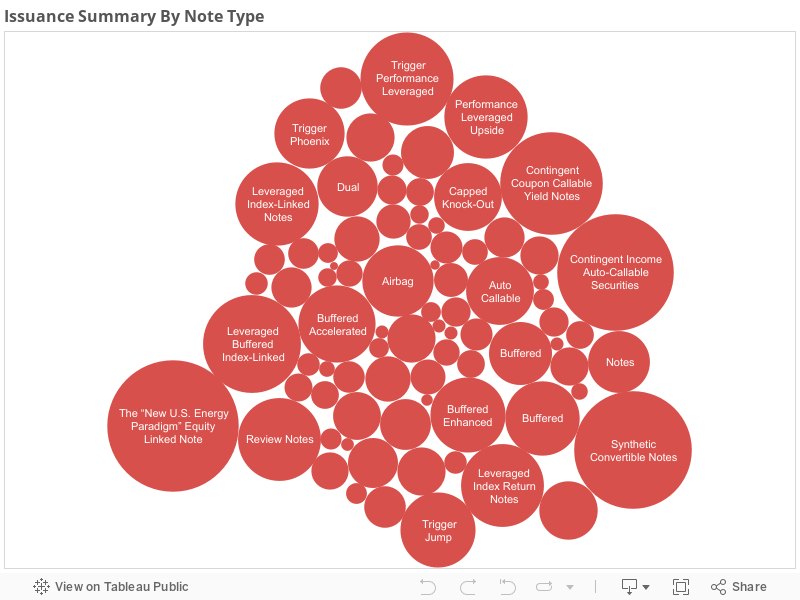
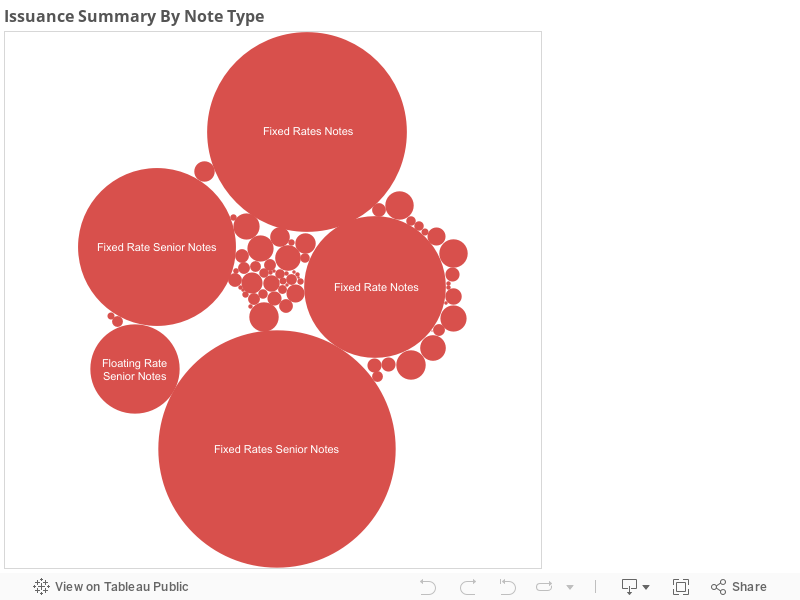
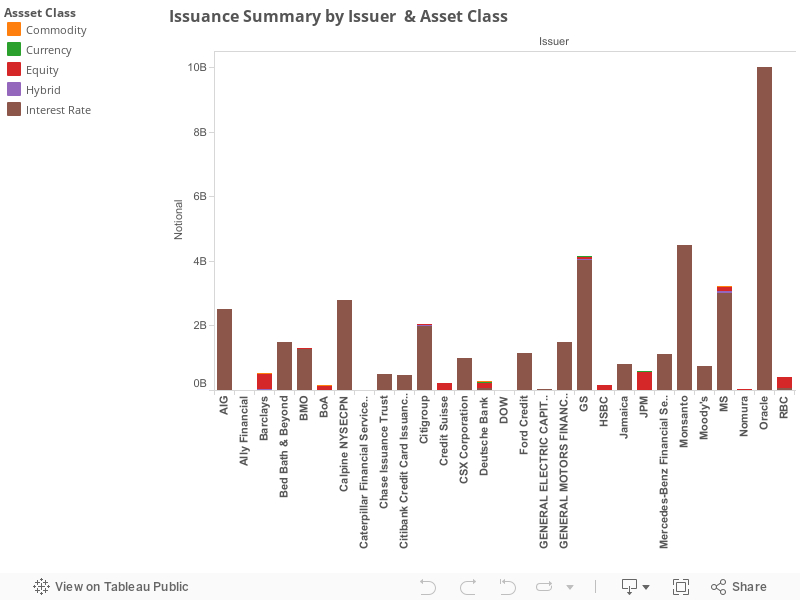
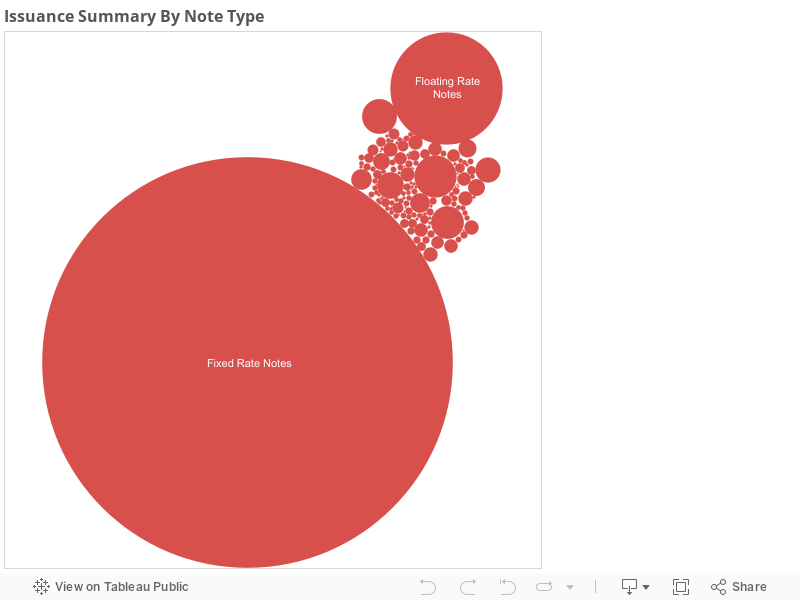
Size of the note types will tell us an indication of what type structures are popular among the investors and where money is flowing. Below chart shows this theme


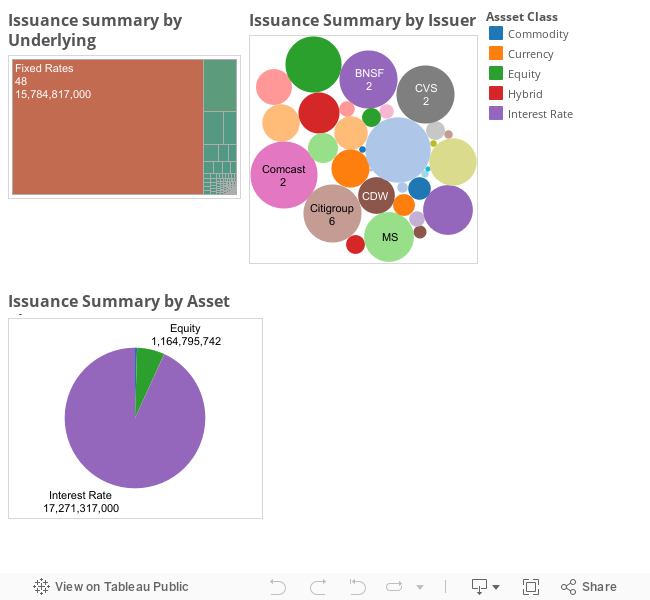
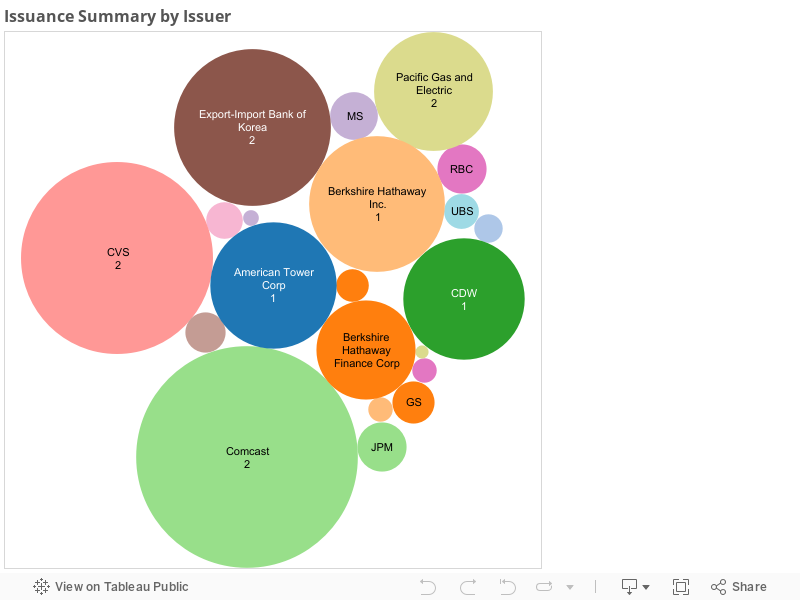
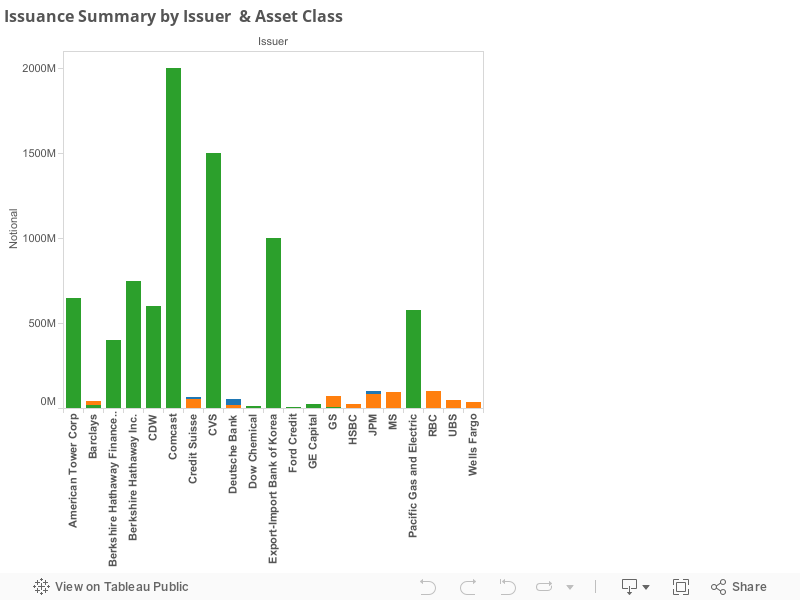
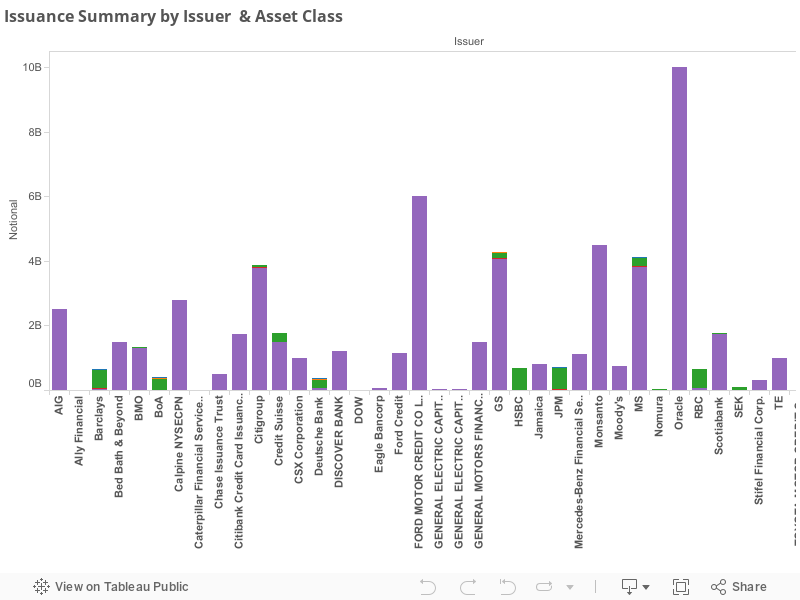
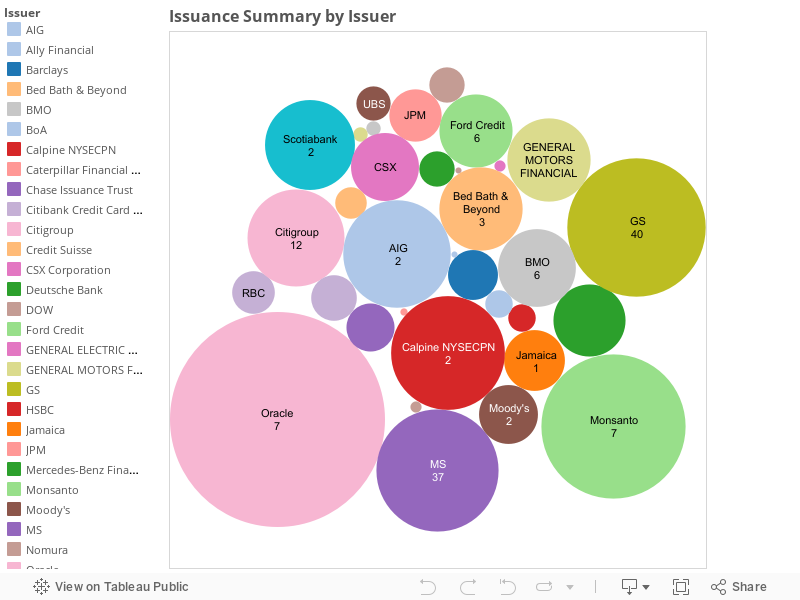
Popular notes have been interest rate linked notes. Now moving on to issuers side and understanding their market penetration or competitor analysis provides some interesting insights. This week UBS, MS, GS and Barclays captured issuance market share.


Market penetration is driven by the issuer depth in each of the asset classes. Every issuer has presence in Equity linked issuance. Goldman is only issuer to produce Currency related issuance. Morgan Stanley and JPM are active players in the Hybrid related issuance.


Sunday, August 10, 2014

Structured Note Issuance Summary – August week 1, 2014


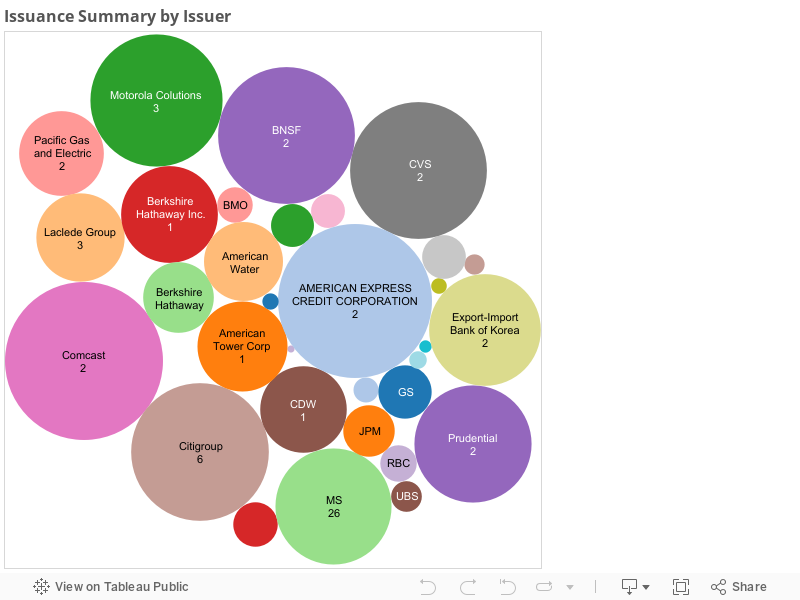
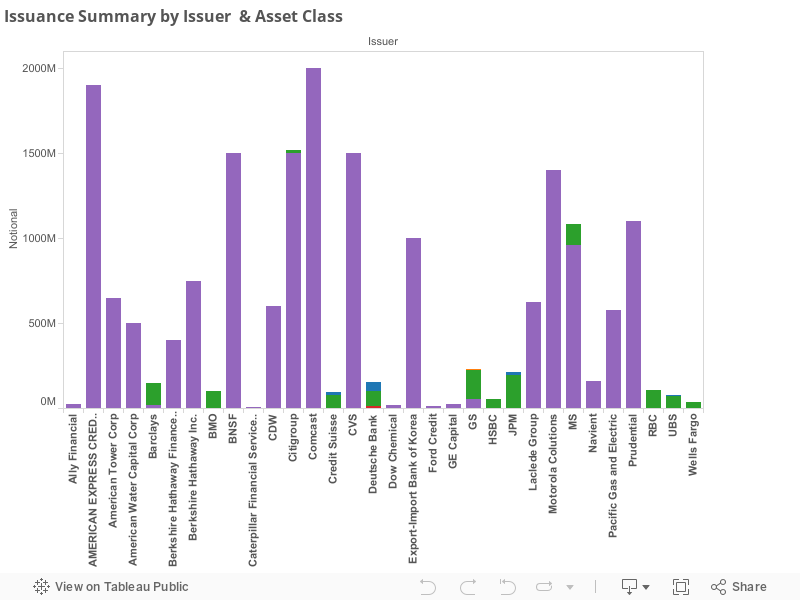
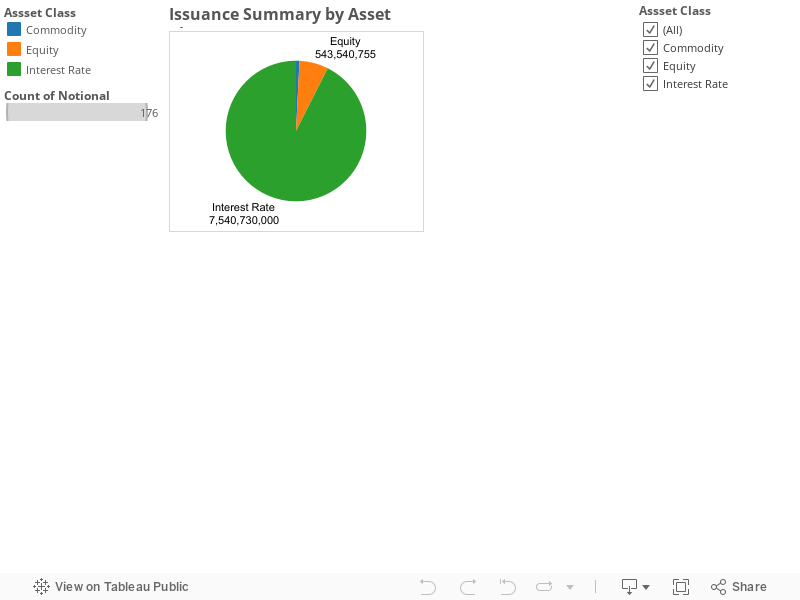
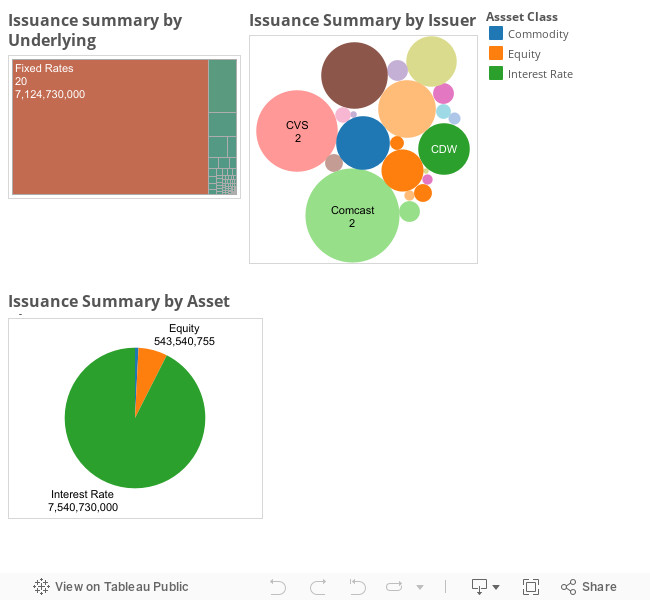
During the week of Aug4- Aug8, 2014 structured note issuance has been $8.1 Billion across various issuers and asset classes. Most of the issuance ($543.5 Million) is driven by Equity Linked notes and $7.5 Billion of the issuance is driven by Interest linked products. There has been some activity in commodity linked issuance this week. For Details of the distribution refer to the chart below. Not surprisingly majority of the structured note issuance is linked to Interest rate linked by few issuers.

This week, structured notes were issued with variety of flavors and interesting themes. Majority of this issuance comprised of Interest Rate related notes Read on for more details.


You can click individual asset classes to see how the underlying issuance has happened within each asset type by underlying and Issuer.


Underlying analysis

On the Equity linked notes front there has been little activity. Notes have been created on variety of underlying. Index related issuance has been significant. This week issuance included notes created on the indices ( S&P 500, Stoxx 50, Russell 2000) and single names ( Amazon, Apple, Genworth Financial, Market Vector Junior Gold Miners ETF, and so on). There has been significant activity around basket linked notes.

Comparing this week to last week there’s less notes being issued. Among the high notional notes is the $39.3 million on the SP 500 by RBC. Another one by Credit Suisse is on SP 500 for $31.5 million and Wells Fargo on the same index for $29.8 million. Barclays issued a note on Walgreen for $15.5 million. UBS issued a note on a basket of 17 for $16.3 million notional. RBC issued a note on Cypress Semiconductor Corporation for $4.7 million notional. JPM issued a note on Lion Gate Entertainment Corporation for $2.7 million notional.


Interest rate linked issuance limited to standard, step up callable notes and Fixed rate notes. Activity has been subdued this week.Citigroup, RBC and few other major issuers of these products.

This week we have seen commodity note issuance tied to Commodity Baskets and Crude Oil by Morgan Stanley..

Size of the note types will tell us an indication of what type structures are popular among the investors and where money is flowing. Below chart shows this theme


Popular notes have been interest rate linked notes. Now moving on to issuers side and understanding their market penetration or competitor analysis provides some interesting insights. This week UBS, MS, GS and Barclays captured issuance market share.


Market penetration is driven by the issuer depth in each of the asset classes. Every issuer has presence in Equity linked issuance. Goldman is only issuer to produce Currency related issuance. Morgan Stanley and JPM are active players in the Hybrid related issuance.


Tuesday, August 5, 2014

Leveraged Capped return Notes on SPX - Should one invest?

HSBC has created a Note with 3 times leverage and maximum profit capped at 10% with a maturity of 14 months. On the down side this note will participate 1 to 1 in down side performance. After reviewing this note with the lens of our Quantitative metrics we think this is note is not for a conservative faint hearted investor. As this note exposes the investor to complete downside performance. One should be careful to invest in this kind of note.


 I gotten interested to analyze this note for few reasons. Firstly, size of the note is 162 Millions. Considering the issuance sizes of various notes, this is note is of relatively large size. Looks like some big institutional client is need of this well crafted exposure to SPX over 14 month period. Alright, second reason for choosing this note is the return profile. This note provides 3 times leverage with return capped at 10%. This means, investor will benefit if SPX rises by 10% only. If SPX rises beyond 10% then note underperforms the underlying index. On the other hand,if SPX Index falls from the initial level investor is exposed to that down performance.

This kind of profile where return is capped with full down side exposure is a very common theme that we have been seeing. We have seen, notes created on single names and indices alike, issuers have created this leverage capped notes with down side exposure.

This type of note cannot be analyzed in isolation to understand the significance of its creation. Rather there are some specific hedging needs that needs to be understood to get the context of the note issuance.

This means not all structured notes are created same. Each one has a unique investment thesis and purpose. One has to understand them to appreciate the creation of the structured Note and before investing.


Sunday, August 3, 2014

Structured Note Issuance Summary – July week 1-5, 2014


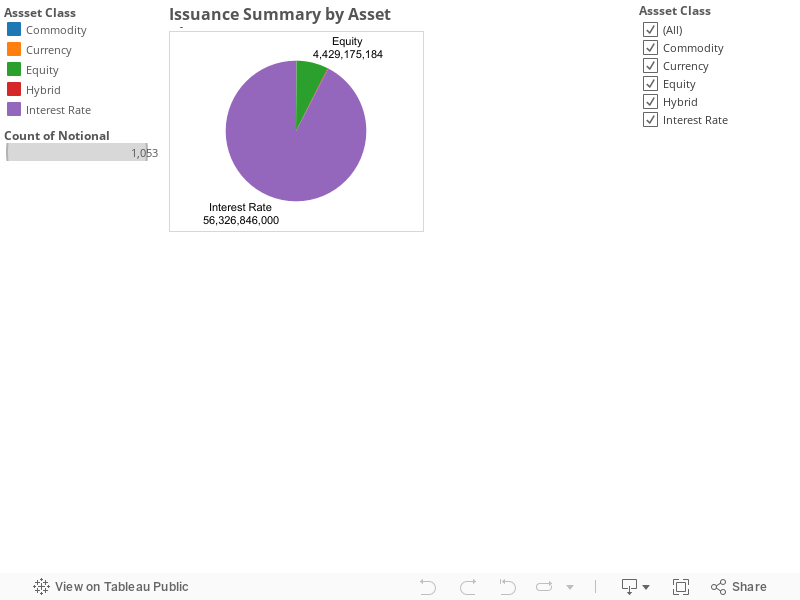
During the week of July 1-Aug1, 2014 structured note issuance has been 60.9 Bn across various issuers and asset classes. Most of the issuance (4.4 Bn) is driven by Equity Linked notes and 56.3 Bn of the issuance is driven by Interest linked products. There has been some activity in commodity linked issuance this week. For Details of the distribution refer to the chart below. Not surprisingly majority of the structured note issuance is linked to Interest rate linked by few issuers.

This week, structured notes were issued with variety of flavors and interesting themes. Majority of this issuance comprised of Interest Rate related notes Read on for more details.


You can click individual asset classes to see how the underlying issuance has happened within each asset type by underlying and Issuer.


Underlying analysis

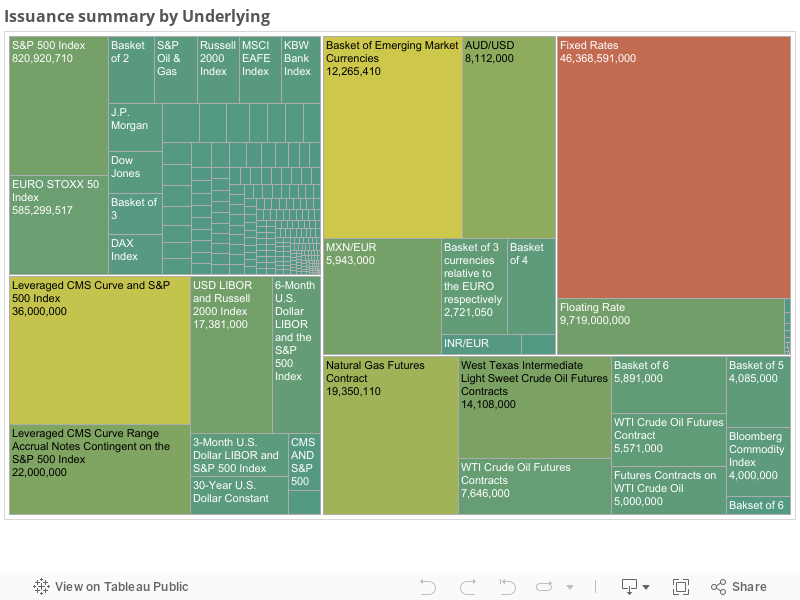
On the Equity linked notes front there has been strong activity. Notes have been created on variety of underlyings. Index related issuance has been significant. This week issuance included notes created on the indices ( S&P 500, Stoxx 50, Russell 2000) and single names ( Face Book, Amazon, Pulte Group, Apple, Yahoo and so on). There has been significant activity around basket linked notes.

Comparing this week to last week there’s more notes being issued. Among the high notional notes is the $162 million on the SP 500 by HSBC. Another one by HSBC is on KBW Bank Index for $86.5 million and a second one with $30.8 million. Morgan Stanly also issued a note on the same KBS Bank Index for $40.5 million. Bank of America played two different notes on the S&P Oil & Gas Exploration and Production Select Industry Index for $55.9 million and $61.4 million. Bank of America also issued a $54.88 million notional note on the PHLX Housing Sector Index.


Interest rate linked issuance limited to standard, step up callable notes and Fixed rate notes. Activity has been subdued this week.Citigroup, RBC and few other major issuers of these products.

This week we have seen commodity note issuance tied to Commodity Baskets and Crude Oil by Morgan Stanley..

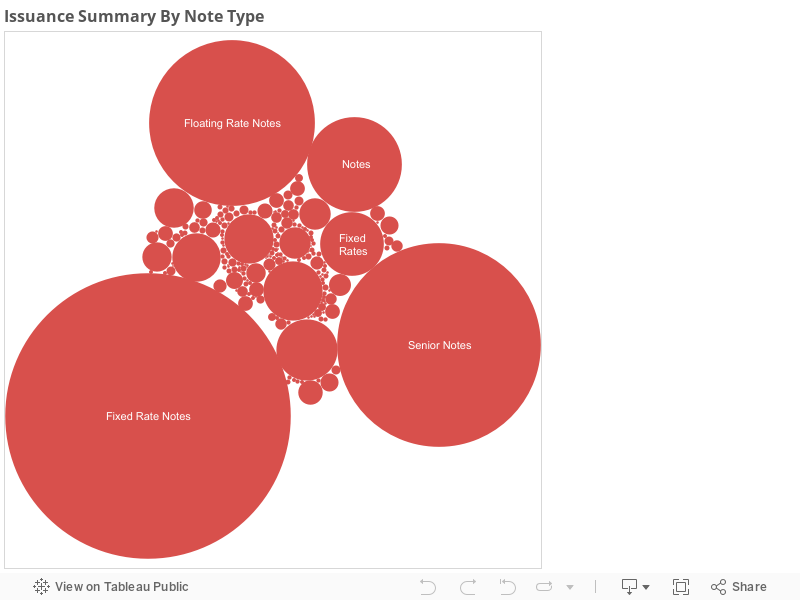
Size of the note types will tell us an indication of what type structures are popular among the investors and where money is flowing. Below chart shows this theme


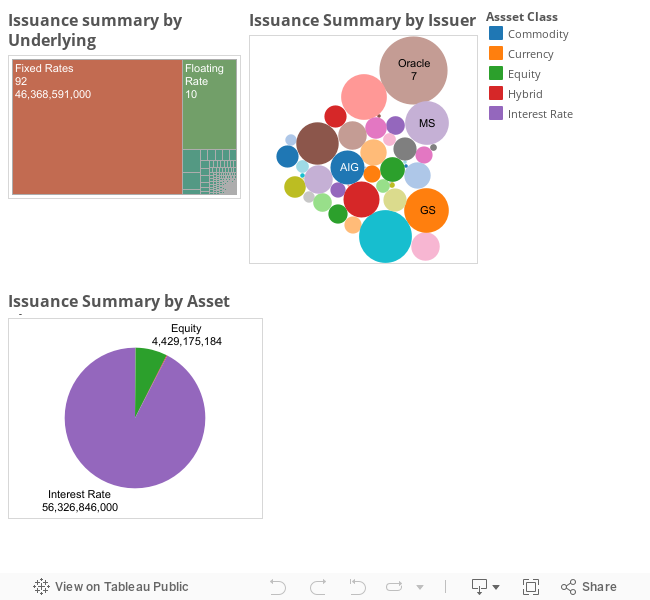
Popular notes have been interest rate linked notes. Now moving on to issuers side and understanding their market penetration or competitor analysis provides some interesting insights. This week UBS, MS, GS and Barclays captured issuance market share.


Market penetration is driven by the issuer depth in each of the asset classes. Every issuer has presence in Equity linked issuance. Goldman is only issuer to produce Currency related issuance. Morgan Stanley and JPM are active players in the Hybrid related issuance.


Monday, July 28, 2014

Autocallable Yielding 17% per annum on Tesla Motors by Barclays

Barclays has created a new structured note on Tesla motors. This note is interesting for two reasons. Last week we have noted how reverese convertible notes created on Tesla Motors by JP Morgan and RBC were different only by 75 basis points in coupon.

Firstly, Barclays also joined the bandwagon of issuers creating structured notes on TESLA motors. Secondly, they have increased the stakes by sweetening the deal with 17% coupon per year. Now they managed to increase this higher coupon by adding the auto callable feature.

Our quantitative metrics were based on historical data of last 4 years. Since this period relates to post financial crisis and stocks were rising from their rock bottom lows. This might not be sufficient to generate metrics. With that said, looking at metrics suggest this is a great investment with very little risk an investor can get.

Our risk score of 3 and probability of sure win is making this note very interesting for us.

Gatick advises investors to look for or create structures similar to this auto callable to make good return on their investment.

We are more than happy to go over the nuances of the underlying options and their risks.

Sunday, July 27, 2014

Structured Note Issuance Summary - July week 4, 20014


During the week of July 1-25, 2014 structured note issuance has been 44.3 Bn across various issuers and asset classes. Most of the issuance (2.75 Bn) is driven by Equity Linked notes and 41.4 Bn of the issuance is driven by Interest linked products. There has been some activity in commodity linked issuance this week. For Details of the distribution refer to the chart below. Not surprisingly majority of the structured note issuance is linked to Interest rate linked by few issuers.

This week, structured notes were issued with variety of flavors and interesting themes. Majority of this issuance comprised of Interest Rate related notes Read on for more details.


You can click individual asset classes to see how the underlying issuance has happened within each asset type by underlying and Issuer.


Underlying analysis

On the Equity linked notes front there has been strong activity. Notes have been created on variety of underlyings. Index related issuance has been significant. This week issuance included notes created on the indices ( S&P 500, Stoxx 50, Russell 2000) and single names ( Face Book, Amazon,Pulte Group, Apple, Yahoo and so on). There has been significant activity around basket linked notes. Looks there is high appetite from institutional investors to conduct their portfolio balancing process.

This week has been a slow week with most of the issuances taking place on Tuesday. There are a few interesting notes. The DAX Index was used as the underlying for three of them. Deutsche Bank issued a note on Delta Air Lines, Inc for total notional $11.9 million. One of the bigger notional was issued by J.P Morgan at $148 million on the J.P. Morgan Enhanced Beta Select Backwardation Alternative Benchmark Total Return Index. Another interesting note is by Barclays on the International Paper Company as a Synthetic Convertible Note at a notional of $41.7 million. Finally UBS used a different variation of their usual notes by issuing Phoenix AutoCallable Notes for six different companies at $500,000 each.


Interest rate linked issuance limited to standard, step up callable notes and Fixed rate notes. Activity has been subdued this week.Citigroup, RBC and few other major issuers of these products.

This week we have seen commodity note issuance tied to Commodity Baskets and Crude Oil by Morgan Stanley..

Size of the note types will tell us an indication of what type structures are popular among the investors and where money is flowing. Below chart shows this theme


Popular notes have been interest rate linked notes. Now moving on to issuers side and understanding their market penetration or competitor analysis provides some interesting insights. This week UBS, MS, GS and Barclays captured issuance market share.


Market penetration is driven by the issuer depth in each of the asset classes. Every issuer has presence in Equity linked issuance. Goldman is only issuer to produce Currency related issuance. Morgan Stanley and JPM are active players in the Hybrid related issuance.


Saturday, July 26, 2014

Reverse Convertibles on TESLA by Royal Bank of Canada and JP Morgan


Reverse convertible notes are mostly criticized by variety market participants for causing huge losses to investors. Despite that fact, we see there is insatiable demand for these notes. This kind of demand is not only prevalent among investors but there is race among issuers to create these notes for their investors.

Myself and my associate Karthik Sharma have looked at reverse convertibles created by JP Morgan and Royal Bank of Canada to their investors on TESLA Motors.

For these two notes, Structured note investment analyzer are provided for details around the Investment theme, Investment metrics,Investment performance and finally around Investment commentary.

Few observations came out from comparing two notes.


  1. Notes are created with similar terms of maturity with slightly better coupon by Royal bank of Canada (RBC)
  2. JP Morgan note has higher commissions compared to RBC note. I think this commission matters only on the day of note creation. When you look at a note value along with commission it will be equal to your initial investment. For an investor this commission should not be a big factor to make decision.
  3. RBC Note provided higher coupon (75 bps ) than JP Morgan note. This suggests RBC has sweetened the deal to attract investors to this note.
Overall I think investors should be indifferent to issuers for these reverse convertibles when these notes are provided on similar terms.

Post financial crisis, people are focusing CDS spreads to evaluate the credit worthiness of the issuer. For a 3M note, RBC or JP Morgan CDS spread will be a technical point rather than a game changer. 

Investors first need to understand the investment theme. In this case, what kind of growth potential in Tesla stock vs structured note. 


Tesla Motors, Inc. (TSLA) stock had been performing well over the last few months. The stock rose from $149.56 to $224.54 by July 24th, 2014 increasing almost 50% since January. This is due to variety of new strategic developments that have resulted in the stock price growth. Notable news the open sourcing of its patents and the introduction of the CUV known as Model X and a smaller sedan known as the Model III. This stock might pull back temporarily but has good potential for appreciation. This would suggest stock has high probability to move with in a narrow range.


Next, Investment metrics need to be looked for making a determination whether the investment theme makes any sense. After analyzing investment metrics, review the note performance in historical and future stress scenario context. Combining all these 3 elements one should look at investment recommendation.

I think note from RBC offers a better deal compared to the Note from JP Morgan.


Reverse Convertible on Tesla by JPM by chandkhand2

Reverse Convertible Tesla RBC by chandkhand2